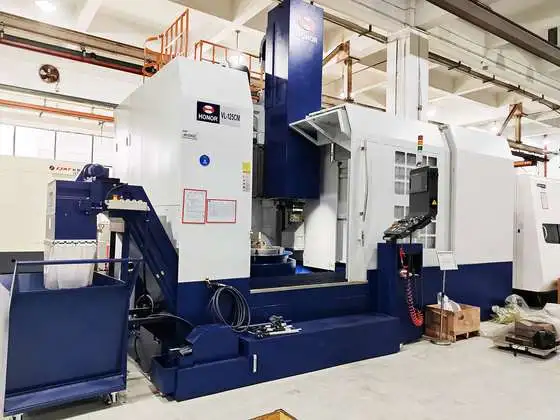
CNC torna,frezalash mashinasi,vertikal ishlov berish markazi,torna freze dastgohlari

Ultrasonic CNC machining represents a transformative hybrid manufacturing technology that merges conventional computer numerical control (CNC) material removal with high-frequency ultrasonic vibration assistance, delivering distinct performance advantages over traditional machining processes. This advanced system integrates piezoelectric transducers that generate 20–40 kHz micro-amplitude (1–10 μm) vibrations, typically applied along the tool’s axial direction, to modify the contact mechanics between the cutting tool and workpiece.
One core feature is its exceptional material versatility, enabling precision processing of notoriously difficult-to-machine materials including engineering ceramics, silicon carbide, sapphire, quartz, carbon fiber reinforced polymers (CFRP), and hardened superalloys that are prone to chipping, cracking, or excessive tool wear under standard CNC operations. The intermittent cutting effect induced by ultrasonic vibration reduces average cutting forces by 30–70% compared to conventional milling or turning, significantly mitigating tool chatter, extending tool service life by 2–5 times, and lowering thermal deformation of delicate workpieces.
Qo'shimcha, ultrasonic CNC machining achieves superior surface quality with Ra values as low as 0.05 mkm, eliminating the need for secondary polishing in most high-precision applications, while maintaining tight dimensional tolerances within ±0.002 mm. The process also minimizes subsurface damage, a critical benefit for aerospace, semiconductor, and biomedical component manufacturing where structural integrity of brittle materials is non-negotiable. When paired with 5-axis CNC platforms, it supports complex 3D contour machining of advanced optical and structural parts, filling critical gaps in precision manufacturing that traditional processes cannot address efficiently. This technology has become an indispensable solution for high-end industrial sectors seeking to balance high material removal rates with ultra-precise, low-damage processing outcomes.